
Eleven steps, in the order they actually happen. Most of them are not the ones people worry about.
Four questions, then we show you where you sit in the eleven steps and what the next thirty days look like. No name, phone or credit pull to see it.
Em will text you shortly to set up a short intro call.
No hard credit pull, no obligation. The first conversation is about what the next thirty days look like for you specifically.
Your information goes only to Speak Straight Mortgage. We do not sell or share it.
Speak Straight Mortgage LLC, NMLS# 2426226. Matthew Wentz, NMLS# 1852397.
Most guides start with saving for a down payment and end with closing. That order is wrong for Colorado, because the part that decides whether your offer gets accepted happens before you ever tour a house.
Sellers here read the loan approval attached to an offer. A prequalification that says a lender pulled your credit and asked what you earn carries almost no weight against a competing offer whose buyer has already been through underwriting. Two buyers offering the same price are not making the same offer.
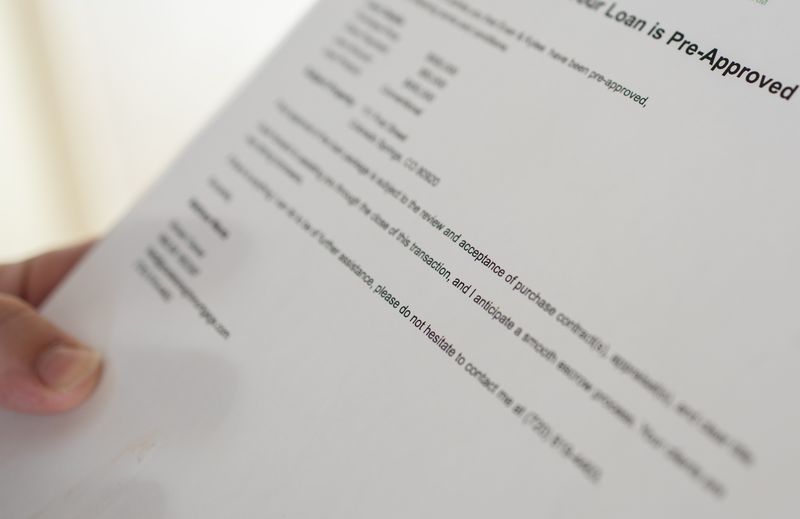
So the first three steps below all happen before you look at listings. They take a few days. Skipping them is what costs people the house they wanted.
The rest of this page is the whole process, written the way we explain it on a first call.
Not what a calculator says. Calculators use a percentage of gross income and stop there. What you can actually borrow depends on your debts, your credit profile, the loan program, the property taxes on the specific house, and whether you carry mortgage insurance.
Two people earning the same salary routinely qualify for amounts that differ by a hundred thousand dollars. The number is worth getting before you build expectations around a wrong one.
Prequalified means someone listened to what you said. Pre-approved means an underwriter read your documents and signed off. In a market where sellers see several offers, that difference is the offer.
You will need pay stubs, two years of tax returns if you are self employed, bank statements, and a credit pull. That is the whole list for most buyers.
When your agent and your loan officer have never spoken, you find out about problems on day twelve of a thirty day contract. When they work together, the offer gets written around what your financing can actually do.
If you do not have an agent, we work with partner agents in the Springs, Denver, and the north and south metro, and we pair you with the one who covers where you are buying.
This is the part everyone pictures, and it is the part with the least at stake, because by now the decisions that matter are made. Look at houses you can finance, in neighborhoods where the taxes and any HOA dues still leave the payment where you want it.
Watch the HOA number on condos and townhomes. Dues are part of your qualifying payment, so a four hundred dollar monthly HOA can cost you seventy thousand dollars of purchase price.
Colorado uses a standard contract published by the Colorado Real Estate Commission. Your agent fills it in, but the dates in it are negotiable and they are the part your lender should see before it goes out.
Price is one term among many. Deadline dates, who pays what at closing, and how much earnest money you put up all move an offer up or down the seller's list.
Every deadline in the contract counts from the date both sides have signed, not the date you wrote the offer. Inspection, appraisal, loan objection, and closing all hang off that one date.
This catches people. If your inspection deadline lands on a Tuesday and the inspector cannot get out until Wednesday, that is a problem you solve before it happens, not after.
You hire the inspector and you pay for it directly, typically several hundred dollars. What comes back is a long document, most of which is not important.
You then have a deadline to raise objections and a separate one to reach agreement with the seller. Miss the first and you have accepted the house as it stands. This is the point in the process where buyers most often walk away, and the contract protects your right to do it.
Your lender orders it, you pay for it, and it exists to protect the loan rather than you. If the appraised value comes in under the contract price, the lender lends against the lower number and the gap becomes a conversation with the seller.
Low appraisals are less common than people fear, but the contract gives you a specific deadline to respond to one, and you want to know that date in advance.
Underwriting asks follow up questions. Where did this deposit come from. Explain this gap in employment. Sign this form again because the date was wrong.
Answer them the day they arrive. Nearly every delayed closing we see traces back to a condition that sat in someone's inbox for four days. And do not open new credit, change jobs, or move large sums between accounts while you are under contract.
Once underwriting has everything, the file is clear to close. Federal rule requires you receive your Closing Disclosure at least three business days before you sign, so you can read the final numbers without anyone standing over you.
Read it. Compare it to the Loan Estimate you got at the start. If a number moved, ask why before you are sitting at the title company.
You sign at the title company, the lender wires the money, the deed records with the county, and the house is yours. In Colorado you usually get keys the same day, though the contract can specify otherwise.
Bring a photo ID. Your down payment and closing costs are wired ahead of time, never brought as a check.
Most of the money moves at closing. A few things you pay for along the way, out of pocket, and those are the ones that surprise people.
| What | When | Roughly |
|---|---|---|
| Pre-approval | Step 2 | No costNobody should charge you to be underwritten. |
| Earnest money | Step 5 | Around 1% of priceHeld by the title company and credited back to you at closing. You get it back if you terminate inside a contract deadline. |
| Inspection | Step 7 | A few hundred dollarsPaid directly to the inspector. Add more for sewer scope or radon, which are worth it on older Front Range housing stock. |
| Appraisal | Step 8 | Several hundred dollarsCollected by the lender, often up front. |
| Down payment | Closing | 0% to 20%Zero on VA and USDA. 3.5% on FHA. Conventional starts at 5%, or 3% for a first time buyer, an HFA program, or a household under 80% of area median income. |
| Closing costs | Closing | Varies by loan and priceLender fees, title, taxes and prepaid escrows. Some are negotiable with the seller, which is a term in the contract rather than a favor. |
Twenty percent is not a requirement and never has been. It is the point at which conventional mortgage insurance falls away. Colorado also runs down payment assistance through CHFA and several local programs, and school employees have their own route through Schools to Home, which is not limited to first time buyers.
From a signed contract to keys is usually thirty to forty five days. The shopping in the middle is the unpredictable part, and it depends far more on inventory and on you than on financing.
Getting to a pre-approval takes a few days. If your credit needs work first, that is a longer road and worth starting now rather than in six months, because scores move slowly and the moves that help are not the obvious ones.

Everything above depends on knowing what you can borrow. That takes about ten minutes and does not touch your credit.
Or call Matt directly at (303) 908-2857.
This page is general information about the home buying process in Colorado and is not a commitment to lend, an offer of credit, or legal advice. Loan approval is subject to underwriting, and program terms, rates and eligibility requirements change.
Cost figures are typical ranges only and vary by lender, title company, county, property and loan program. Your actual costs are disclosed to you on a Loan Estimate after you apply and on a Closing Disclosure at least three business days before closing.
Down payment assistance and CHFA program terms are set by the administering agency and are subject to income, purchase price, occupancy and education requirements. Speak Straight Mortgage is not affiliated with, endorsed by, or acting on behalf of CHFA or any government agency.
Contract deadline descriptions above are a plain language summary of how the Colorado Real Estate Commission's approved contract generally operates. The contract itself controls, and you should read it with your real estate agent or an attorney.
Photographs by Kaitlyn McEntire Photography, used with permission.